One Punch Man Characters
The full cast guide — every key character, their role, abilities, and place in the story.
One Punch Man follows a world where superhero organizations combat escalating monster threats across multiple cities. The story centers on an unassuming bald man whose relentless training regimen granted him unparalleled strength, now searching for meaningful challenges. Alongside him exists a complex ecosystem of heroes ranging from legitimate saviors to attention-seeking celebrities, each navigating their own motivations. The narrative balances absurdist humor with genuine emotional depth, exploring themes of ambition, purpose, and what it truly means to be a hero when power becomes secondary to character.
All One Punch Man Characters
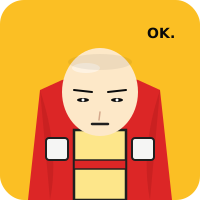
Saitama
ProtagonistA deceptively ordinary-looking hero who achieved god-tier strength through disciplined self-training. Perpetually bored by his invincibility, he struggles with the paradox of getting everything he wanted yet feeling hollow. His apathy masks genuine care for those around him, making him unexpectedly wise despite surface-level indifference.
Genos
Main CastA cyborg disciple who devoted himself entirely to Saitama's mentorship after the bald hero saved his life. His unwavering loyalty and serious demeanor contrast sharply with his master's laziness, yet he remains endlessly optimistic about self-improvement. Genos serves as the emotional anchor grounding Saitama's philosophy.
Bang
SupportingAn elderly martial arts master operating independently, Bang champions technique and discipline as paths to heroism. His flashy fighting style compensates for aging physiology, and his mentor role extends beyond students to younger heroes he encounters. Despite his age, he remains refreshingly capable and principled.
Tatsumaki
SupportingA telekinetic powerhouse with an inferiority complex toward stronger beings, especially her institutionalized sister. Her arrogance masks deep insecurity about her position in the hero hierarchy. Though self-serving initially, encounters with genuine heroism slowly reshape her worldview and allegiances.
King
Main CastA seemingly invincible hero whose reputation vastly exceeds his actual combat abilities, since he accidentally profits from others' victories. Despite constant anxiety about exposure, his strategic thinking and unexpected combat luck occasionally prove genuinely valuable. His friendship with Saitama highlights the comedy of mistaken perception.
Mumen Rider
SupportingAn earnest bicycle-based hero with negligible superpowers who compensates through persistence and moral conviction. He represents the idealistic hero archetype, willing to face overwhelming odds with courage alone. His genuine heroism often surpasses more powerful counterparts, inspiring others through sheer determination.
Boros
AntagonistAn alien overlord who conquered galaxies searching for worthy opponents, only to finally encounter Saitama. His cosmic power and tragic backstory reveal vulnerability beneath his god-like exterior. Their climactic battle represents a rare moment where Saitama confronts someone genuinely his equal in strength and ambition.
Garou
AntagonistA talented martial artist turned villain who pursues strength through defiance and rebellion against hero society. His philosophical opposition to conventional heroism creates ideological tension rather than simple good versus evil. As he grows stronger, Garou questions his own motivations and identity.
Fubuki
SupportingA calculating psychic operator running her own hero group while secretly envying her sister's innate power. Her focus on networking and image contrasts with genuine heroic values, yet she gradually demonstrates authentic heroism when stakes matter. She forms an unlikely friendship dynamic with Saitama despite his indifference.
Sonic
SupportingA speed-obsessed ninja assassin and recurring comedic foil to Saitama. His single-minded pursuit of rivalry with the bald man drives most of their encounters, yet genuine mutual respect develops beneath the antagonism. Sonic's character arc explores how obsession can drive personal growth or self-destruction.
Metal Knight
SupportingA technologically-augmented hero who relies on innovative machinery rather than innate power. His mysterious motivations and shadowy information gathering suggest deeper involvement in hero society than publicly acknowledged. He represents pragmatic heroism through preparation and resource accumulation rather than raw strength.
Sweet Mask
SupportingA celebrity idol-turned-hero whose handsome appearance and media presence overshadow his genuine combat capabilities. His obsession with maintaining perfect public image drives most decisions, yet genuine heroic moments suggest complexity beneath the vanity. He represents critique of celebrity culture infiltrating heroism.
One Punch Man Character FAQs
Who is the strongest character in One Punch Man?
Saitama stands uncontested as the strongest character, having achieved his power through a self-imposed training regime of one hundred push-ups, sit-ups, and squats daily plus ten kilometers of running. His opponents consistently demonstrate that no attack damages him, though Boros briefly offered genuine competition through comparable cosmic-scale power. By series progression, no character definitively surpasses Saitama's demonstrated capabilities, though Tatsumaki and Garou represent the closest challengers.
What is Genos's relationship with Saitama?
Genos became Saitama's devoted disciple after the bald hero saved his life during a confrontation with a mad cyborg who destroyed his hometown. Despite Saitama's apathetic teaching methods, Genos maintains unwavering admiration and loyalty, constantly seeking to improve himself and prove worthy of his mentor. Their relationship grounds the narrative with genuine emotional stakes, as Genos represents what Saitama's power could mean to others beyond boredom and frustration.
Are Tatsumaki and Fubuki enemies?
Tatsumaki and Fubuki maintain a complicated sisterly relationship rooted in deep family history. Tatsumaki was institutionalized after childhood incidents, leaving Fubuki to develop independently and form her own hero organization. While initial encounters appear hostile, their dynamic reveals underlying care mixed with resentment and rivalry. Neither purely opposes the other; rather, their relationship evolves as they navigate past trauma and current priorities throughout the series.
What makes Garou different from other villains?
Garou diverges from typical antagonists by pursuing strength through philosophical opposition to conventional heroism rather than conquest or destruction. He views heroes as hypocritical and society as corrupt, fighting against the system itself rather than specific opponents. This ideological dimension creates moral complexity absent in straightforward villains like Boros, forcing confrontation with whether his critiques hold validity despite his violent methods and increasing monstrosity.
Does Saitama ever find meaningful challenge or purpose?
Throughout the series, Saitama struggles perpetually with his invincibility, unable to discover opponents capable of threatening him despite his constant searching. Brief moments of connection with Genos and interactions with genuinely heroic individuals like Mumen Rider offer temporary purpose, suggesting meaning comes through human relationships rather than combat satisfaction. The narrative explores whether fighting and winning constitute fulfilling existence or if something deeper remains unfulfilled.
Who are the main hero organizations in the series?
The Hero Association operates as the primary institutional organization ranking heroes by class and assigning missions accordingly, though its bureaucratic nature often conflicts with true heroism. Fubuki independently runs a smaller faction focusing on networking and status advancement. Bang operates his dojo independently, emphasizing martial tradition and mentorship. Most powerful heroes navigate between institutional affiliation and independence, creating tension between organized heroism and individual conviction.